How to Choose a LinkedIn Marketing Agency for B2B Engineering & Manufacturing Companies

I help engineering and manufacturing companies generate real pipeline on LinkedIn. Not impressions. Not follower counts. Actual conversations with procurement managers, operations directors, and technical decision-makers that turn into contracts.

I’ve worked across the full spectrum of industrial businesses, automation firms, construction subcontractors, precision engineering manufacturers and the pattern I keep seeing is the same. A well-run company with a genuinely strong offering hands their LinkedIn over to a generic agency, spends three to six months watching nothing happen, then concludes that LinkedIn doesn’t work for their industry. It does work. The agency just didn’t understand what they were selling, who they were selling to, or how industrial buyers actually make decisions.

What follows is everything I’ve learned about how to choose the right partner, the criteria that matter, the questions to ask, and the warning signs that will save you a lot of time and money.

Why Most Agencies Get LinkedIn Wrong for Engineering Companies

From running campaigns in the industrial space, I can tell you the core problem: most LinkedIn agencies come from a consumer or SaaS background. They know how to write engaging posts for a broad audience. They know how to set up a paid campaign and optimize for clicks. What they don’t know is how to speak to a procurement manager who is evaluating three suppliers, needs to justify a six-figure purchase to a board, and has been burned before by a slick sales pitch that didn’t deliver.

The buying cycle in engineering and manufacturing is long, technical, and relationship-driven. This is precisely why energy marketing differs from traditional B2B marketing – industrial buyers require a fundamentally different approach. They are building trust slowly, doing their due diligence, and looking for evidence that you actually understand their world. An agency that treats your LinkedIn like an Instagram account posting motivational quotes and generic industry news is actively eroding that trust with every post they publish.

What I’ve also learned is that LinkedIn’s organic reach is still genuinely powerful in this space. Four out of five users on the platform are decision makers. They are not scrolling for entertainment. They are there because LinkedIn is where professional conversations happen. If you show up with the right content and the right outreach approach, you can reach the exact people you want to do business with often without spending a single penny on advertising.

What I’ve seen consistently

The biggest missed opportunity in B2B engineering is organic LinkedIn. Most companies either don’t post at all, or post content that means nothing to their buyers. Professional lead generation services that understand this approach are far more valuable than running ads and cost a fraction of the price

7 Things to Look for in a LinkedIn Agency for Engineering B2B

1. Engineering Niche Experience

This is the first thing I check. Not whether they have a manufacturing logo on their website or whether they can demonstrate they understand how your buyers think and buy. I ask them directly: have you worked with companies that have long technical sales cycles? Can you show me content you’ve produced for an industrial client?

An agency without this background will write posts that sound fine on the surface but miss the mark entirely with your audience. They won’t know the difference between content that resonates with a plant engineer versus a commercial director. That matters enormously in this sector. This is exactly why specialized LinkedIn outreach for energy companies delivers better results than generic B2B marketing approaches

2. Focus on Qualified Leads, Not Vanity Metrics

The biggest mistake I see companies make is hiring an agency that leads every conversation with reach and engagement metrics. Likes don’t pay your invoices. The right agency will be focused on:

  • Cost per qualified lead what you’re actually spending to get a real prospect into your funnel
  • Sales conversations generated how many genuine opportunities are coming through
  • Pipeline contribution what proportion of your revenue can be traced back to LinkedIn activity

If an agency’s monthly report is full of impression numbers but can’t tell you how many leads they generated, that’s a problem I’ve seen derail companies’ LinkedIn programmes entirely. Understanding which key performance indicators truly matter in oil and gas is essential for measuring real marketing success.

3. They Can Handle Technical Content

I’ve worked with engineering firms where the product is genuinely complex custom automation systems, specialist civil engineering, precision-machined components. Your buyers are highly technical. They will immediately spot content that’s been written by someone who doesn’t understand the industry.

What works in this space is content that speaks directly to real operational problems. Case studies that detail a specific challenge and how it was solved. Articles that show genuine understanding of manufacturing or construction pain points. Posts that make a procurement officer or project manager think ‘this company understands what we’re dealing with.’

Ask any agency you’re considering to show you technical content they’ve produced for a similar client. If they can’t, that tells you everything.

4. A Structured Outreach Strategy

From running outreach campaigns over the years, I know that relationship-driven, personalised connection strategies consistently outperform automated mass messaging. Not just marginally significantly. When we connect with a prospect through a warm, personalized approach and they’ve already seen a few of our posts, the conversation conversion rate is around 15%. When you use automated InMail, it drops to 1 or 2%.

A credible agency will have a clear, structured outreach framework built on human judgment:

  • Using LinkedIn Sales Navigator to identify the right decision makers by job title, seniority, and company type
  • Engaging with a prospect’s content before sending a connection request
  • Writing personalised messages that reference something specific not templates blasted at scale
  • Following up consistently, because 80% of deals close after the seventh touchpoint

Any agency that mentions bots or bulk automation tools is not just ineffective, they’re a liability. LinkedIn actively penalises these tactics and can restrict or ban your account entirely.

Red flag I always watch for

If an agency can’t explain their outreach process step by step who reaches out, what they say, how they follow up that’s a serious gap. Outreach is where deals are actually made, and most agencies handle it poorly.

5. An Integrated Organic + Paid Strategy

What I’ve learned from working with both organic and paid LinkedIn strategies is that the sequence matters as much as the tactics. Companies that jump straight into paid advertising without an established organic presence almost always see poor results. People don’t convert because you paid to be seen. They convert because they already know who you are and trust what you do.

The approach I recommend and that I’ve seen work consistently is to start by building your organic foundation. Get your profile and company page properly optimised. Establish a content framework with clear pillars and a consistent posting rhythm. Build authority with your target audience first. Then, once that credibility is in place, layer in paid campaigns to extend your reach to new audiences who can be warmed up by the content you’re already publishing.

When agencies push you straight to ads, I’m always sceptical. It’s often because they understand paid media from their previous work on Facebook or Google, and they’re replicating that approach on a platform where it doesn’t work the same way.

6. Their Reporting Is Clear and Tied to Real Outcomes

I’ve seen companies pay significant monthly retainers for reports that are essentially decorative. Beautifully designed PDFs full of reach statistics and engagement trends that have no connection whatsoever to whether the business is growing.

What good reporting looks like, from my experience:

  • Qualified leads generated this month with names, companies, and where they are in the conversation
  • Cost per lead and how it’s trending over time
  • Which content is driving the most meaningful engagement (comments from target buyers, not just likes)
  • Pipeline impact what has moved forward as a result of LinkedIn activity

If you’re not receiving this level of reporting, ask for it. If the agency can’t provide it, they’re not tracking what actually matters.

7. They Can Target with Precision Using ABM

One of the things LinkedIn genuinely does better than any other platform is professional targeting. You can reach procurement managers at engineering firms with over 200 employees in specific geographic regions. You can filter by seniority, job function, industry sector, and company size simultaneously. For a business selling specialist engineering services, that level of precision is extraordinarily valuable.

What I look for is an agency that understands account-based marketing targeting specific companies and decision-makers, not just broad audience segments. In engineering and manufacturing, you often know the exact types of companies you want to work with. A skilled agency will build campaigns around that intelligence rather than casting a wide net and hoping for the best.

5 Questions to Ask Before You Sign a Contract

Before you commit to any agency, ask these five questions. The answers will tell you very quickly whether this is a partner worth working with.

1. What is your full process, from strategy to lead handover?

A credible agency should be able to walk you through every step: profile audit, positioning, content framework, outreach methodology, lead tracking, and reporting. If they can’t describe this clearly, they don’t have a real process. They’re making it up as they go.

2. Who actually does the work on my account day to day?

I’ve seen too many companies get sold on a senior team, then handed to a junior with no LinkedIn expertise or, worse, an overseas virtual assistant who knows nothing about the platform. Find out exactly who your account manager is, what their background looks like, and whether they have direct experience with LinkedIn specifically.

3. Can you show me real lead outcomes, not just engagement data?

Before evaluating any agency’s results, it’s worth understanding what actually works in oil and gas marketing in 2026 so you can benchmark their approach against proven strategies. Ask for case studies with actual numbers. How many leads were generated? What was the cost per lead? Did those leads convert into sales conversations or proposals? If they can only show you reach and follower growth, that should give you pause.

4. What happens if results aren’t where they should be after 60 to 90 days?

What I’ve found is that confident agencies have a clear answer to this. They’ll describe a structured review process, explain how they identify what isn’t working, and commit to a strategy adjustment. Agencies that get defensive or vague about this question are telling you something important about how they’ll behave when you actually need them to course-correct.

5. What KPIs will you report on, and how often?

Weekly updates for active campaigns and monthly strategic reviews is the standard I’d expect. The KPIs should be tied to qualified leads and pipeline, not impressions. If they can’t commit to this from the outset, it’s not going to get better once you’ve signed.

The Red Flags I’ve Learned to Spot Immediately

After years of seeing what works and what doesn’t, here are the warning signs I always flag for clients who are evaluating agencies:

  • They promise guaranteed results or specific lead numbers no legitimate agency can guarantee this, and anyone who does is setting you up for a dispute
  • Their pitch is built around growing your audience rather than filling your pipeline
  • They can’t show case studies from B2B or industrial clients with measurable ROI
  • They plan to outsource execution to low-cost generalists with no LinkedIn expertise
  • They lead with paid advertising before understanding your organic positioning
  • Their own LinkedIn presence is weak if they can’t market themselves effectively, that tells you something
  • Every post on their clients’ pages gets the same handful of comments that’s an engagement pod, where people artificially boost each other’s content to game the algorithm
  • Their proposal is generic no customisation for your industry, your buyers, or your sales cycle

What a Serious Agency Proposal Looks Like

From my experience reviewing agency pitches, here’s what should be in any serious proposal before you consider signing:

  • A clear positioning strategy specific to your industry and target buyer not a template
  • Defined content pillars based on your buyers’ actual pain points
  • A sample content calendar with realistic posting frequency
  • Outreach methodology with specific targeting criteria for your ideal client profile
  • KPIs and measurement framework tied to qualified leads and pipeline
  • Realistic milestones at 30, 60, and 90 days
  • Named team members who will work on your account with their relevant experience
  • Case studies from clients in comparable B2B sectors
  • Transparent pricing with no ambiguity about what’s included

If any of these elements are missing, ask directly why. A strong agency will have a good answer. A weak one will get evasive.

My Thought

Choosing the right LinkedIn agency for an engineering or manufacturing business is genuinely one of the highest-leverage decisions you can make for your lead generation. The wrong partner wastes your budget, damages your credibility with precisely the buyers you’re trying to impress, and leaves you more sceptical of LinkedIn than when you started.

The right partner understands the industrial buyer. They know that trust is built slowly in this sector, that technical credibility matters, and that the goal is qualified conversations not content that performs well in a monthly report. They’re transparent about what they’re doing, accountable when it isn’t working, and relentlessly focused on whether LinkedIn is actually contributing to your pipeline.

Use everything in this guide as your filter. The agencies that can answer these questions clearly and back their claims with real evidence from similar clients are the ones worth talking to. The ones that can’t no matter how polished their pitch aren’t worth your time.

More Resources

B2B SEO Conversion Strategy: A Practical Guide

7 Essential Digital Marketing Tactics for Oil and Gas Companies

Why Inbound Marketing Works in the Energy Sector

Strategic Content Types for Oil & Gas Industry

I work exclusively with oil and gas and energy companies on content marketing. Over the years, I’ve seen one pattern repeat itself: companies that build the right content strategy don’t just survive market cycles they grow through them.

This isn’t a generic B2B marketing guide. What follows are the exact content types I’ve used to help upstream, midstream, and downstream companies build awareness, fill lead pipelines, and stay competitive against larger players.

The oil and gas industry has long sales cycles (12–24 months), highly technical buyers, complex regulatory environments, and increasing ESG pressure. The content that works here is nothing like what works in consumer B2B. I’ll walk you through what actually moves the needle.

Real Awareness Challenge in Oil & Gas

Before I build any content strategy for an energy company, I make sure we’re honest about what we’re up against. Awareness building in this industry has three barriers that most generic content frameworks completely ignore.

Technical Credibility Gap:

Your audience petroleum engineers, geoscientists, operations managers can immediately tell when content is shallow. Superficial posts don’t just fail to convert, they damage credibility. Technical depth isn’t optional.

Confidence Gap:

Equipment failures, safety incidents, and regulatory non-compliance cost millions. Prospects need overwhelming proof before they’ll consider a new vendor. That proof has to live in your content long before a sales conversation starts.

Multi Stakeholder Buying Committees:

A single lead in oil and gas typically represents 6–12 decision influencers across operations, HSE, procurement, finance, legal, and sustainability. Content that speaks to only one persona loses the rest of the room.

What Is a Content Marketing Type?

Content marketing types are the formats you use to translate complex technical capabilities into credible stories for petroleum engineers, operations managers, and C-suite executives.

In oil and gas, these range from static formats—technical blog posts, case studies with performance data, compliance guides, and research reports—to dynamic formats like technical webinars, facility tour videos, and interactive ROI calculators.

The right type educates technical stakeholders, convinces risk-averse committees, and converts prospects evaluating your capabilities over quarters, not days.

Why Content Types Matter in Oil & Gas

Your format choices directly impact pipeline quality in an industry where single contracts run eight figures and credibility gaps are irreversible.

The right mix enables you to:

  • Build technical authority with skeptical engineers who spot shallow content immediately
  • Generate qualified leads through gated white papers and assessment tools that attract high-intent prospects
  • Dominate organic search for specific operational challenges rather than generic terms
  • Engage multi-stakeholder committees across technical, financial, legal, and sustainability concerns
  • Sustain long sales cycles without audience fatigue through varied, relevant formats

The cost of getting it wrong: Misaligned content doesn’t just fail—it damages credibility. Once technical buyers label you marketing-heavy and engineering-light, recovery takes years.

If you’re looking to implement these strategies with a structured, technically credible approach, our energy content marketing services are designed specifically for oil and gas companies navigating long sales cycles and complex buying committees.

How the Oil & Gas Lead Pipeline Actually Works

Traditional marketing funnels don’t map to how oil and gas companies actually buy. This aligns closely with what actually works in modern oil and gas marketing strategy, where long sales cycles and multi-stakeholder decisions reshape how pipelines are built.

Technical Discovery:

Prospects identify operational challenges and research solution categories. They’re consuming educational content to understand what’s possible, not looking for vendors yet.

Vendor Evaluation:

Prospects shortlist 3–5 vendors based on technical capability, industry track record, and regulatory compliance. This is where proof of performance matters most.

Relationship Building:

Final selection comes down to demonstration projects, financial terms, and relationship quality. Content in this stage supports partnership validation, not lead capture.

This guide focuses on content for Stages 1 and 2 the awareness and lead generation phases where content investment delivers the highest ROI.

Best Content Types for Oil & Gas

Technical Blog Posts & Educational Articles

Engineers and technical professionals start their research with search engines, which is why having a structured approach to energy SEO keyword strategies is critical for capturing high-intent technical queries.

What I’ve learned: surface-level content actively hurts you in this industry. I only recommend publishing content that’s 1,500–2,500 words with real technical depth including equations, diagrams, performance data, and citations to industry standards like API, ISO, and ASME.

Target long-tail keywords that signal problem awareness. ‘Reducing methane emissions offshore platforms’ will always outperform ‘oil and gas equipment’ for lead quality.

Example topics that work:

  • “5 Engineering Approaches to Minimize Downtime in Subsea Production Systems”
  • “Comparative Analysis: Fixed vs. Floating Offshore Wind Foundations for North Sea Conditions”
  • “Understanding API 610 Compliance for Centrifugal Pumps in High-Temperature Applications”

Lead capture tip: Offer downloadable technical appendices, calculation tools, or compliance checklists in exchange for email and company information.

Original Industry Research & Data Reports

Original research is the single highest-value awareness asset for reaching C-suite and director-level leads. It positions your company as a thought leader and generates earned media in trade publications that you simply can’t buy.

Research formats that drive pipeline:

  • Benchmarking studies that survey operational metrics across your client base for example, ‘Global Upstream Operating Efficiency Report 2025: Analysis of 250 Offshore Platforms’
  • ESG and sustainability reports that quantify emissions reduction pathways or analyze renewable integration strategies
  • Technology adoption studies documenting how AI-powered predictive maintenance, digital twins, and autonomous systems are delivering measurable ROI
  • Region-specific market forecasts, such as ‘Middle East LNG Export Infrastructure Investment Forecast 2025–2030’

Distribution tip: Launch with an embargo-period media outreach to Oil & Gas Journal, Offshore Engineer, and JPT. Create executive summaries for LinkedIn and detailed findings for gated downloads.

Technical Webinars & Virtual Workshops

Live interaction lets prospects assess your team’s expertise in real time. Webinars generate highly qualified leads and attendees self-select by investing 45–60 minutes of their time. That’s a strong intent signal.

Formats that work:

  • Technical deep dives on a single topic with detailed methodology for example, ‘Advanced Corrosion Monitoring in Sour Gas Environments: Sensor Technologies and Data Interpretation’
  • Regulatory update sessions with timely analysis of new standards and implementation guidance
  • Industry expert panels bringing together client engineers, third-party consultants, and your technical team
  • Live case study walkthroughs with performance data, lessons learned, and Q&A with project engineers

Start promoting 3–4 weeks before the event through email campaigns, LinkedIn sponsored content targeting specific job titles, and industry association partnerships.

Data-Driven Infographics & Technical Visualizations

Complex technical data becomes shareable social content when it’s visualized well. Infographics drive LinkedIn engagement and build your reputation as an information source not just a vendor.

Topics that perform:

  • Process flow diagrams comparing technology approaches
  • Performance benchmarking data: efficiency improvements, cost reductions, safety metrics
  • ESG impact visualizations: emissions reductions, energy efficiency gains, water management statistics
  • Regulatory compliance roadmaps with timeline visualizations

Technical Case Studies & Project Success Stories

Case studies are the most influential content type for lead conversion in oil and gas. Full stop. They provide the social proof required to overcome the risk aversion that’s inherent in high-stakes technical purchasing.

Every case study I help clients produce includes:

  • Client profile with asset type, operational context, and specific technical challenges
  • Technical solution details: methodology, equipment specs, engineering approach, implementation timeline
  • Quantified results with percentage improvements in uptime, efficiency, safety incidents, emissions, or cost savings
  • Client testimonials direct quotes from operations managers, chief engineers, or HSE directors. Video testimonials are 3x more effective than text.
  • Lessons learned: what challenges arose and how your team adapted. This demonstrates problem-solving capability better than any claim.

Format options:

  • One-page summary in Challenge → Solution → Results format for quick scanning
  • Long-form feature story (2,000–3,000 words) showcasing the full partnership
  • 3–5 minute video case study with client interviews and site footage

Technical White Papers & Solution Guides

White papers are lead magnets for prospects in active evaluation mode. The gated download qualifies the lead only serious prospects will hand over company information to access technical documentation.

Topics that convert:

  • Technology comparison guides with objective analysis and decision frameworks for example, ‘Selecting Subsea Control Systems: A Comparison of Hydraulic, Electric, and Hybrid Technologies’
  • Implementation playbooks with step-by-step methodologies for complex projects
  • Cost-benefit analysis with ROI models, sample calculations, and sensitivity analyses
  • Regulatory compliance guides with detailed standards interpretation and compliance roadmaps

Interactive Calculators & Assessment Tools

Interactive tools give immediate value while capturing detailed lead intelligence. When a prospect inputs their operational data, you learn their parameters, pain points, and budget range invaluable for the sales conversation that follows.

Tools that work:

  • ROI calculators where prospects input their operational data to see projected savings or efficiency gains
  • Equipment sizing tools that help prospects determine appropriate specifications for their applications
  • Compliance assessment checklists that identify gaps against regulatory requirements
  • Performance benchmarking tools that let users compare their metrics against industry averages

Product Demonstrations & Facility Tour Videos

Video builds trust by showing your capabilities, not just describing them. For prospects who can’t visit your facilities, high-quality video provides the visual proof they need around manufacturing quality, testing protocols, and operational standards.

Video content I recommend:

  • Manufacturing and quality control walkthroughs documenting production processes and testing procedures
  • Technology demonstrations showing equipment operating under real-world or simulated conditions
  • Installation walkthroughs time-lapse or detailed documentation of complex procedures
  • Safety and training highlights showing your HSE protocols in practice

Common Mistakes in Oil & Gas Content Strategy

Even experienced marketers fall into predictable traps in this industry. I’ve seen these mistakes cost companies qualified leads, budget, and credibility. For a broader look at how to build a complete digital marketing approach, visit our guide on 7 Essential Digital Marketing Tactics for Oil and Gas Companies.

Prioritizing Volume Over Technical Depth

Publishing a lot of generic content does more damage than good in oil and gas. Petroleum engineers and operations managers will immediately spot shallow writing and once that credibility is gone, it’s nearly impossible to recover. Four well-researched articles per quarter will always outperform 20 surface-level posts.

Ignoring the Multi-Stakeholder Buying Committee

A single purchase decision involves 6–12 stakeholders: operations, HSE, procurement, finance, legal, sustainability. Content that only speaks to the technical engineer fails to move the full committee. Every content asset should address at least two distinct stakeholder concerns.

Skipping the ESG and Regulatory Angle

ESG compliance and regulatory alignment are front-of-mind for every senior decision-maker in energy today. Content that focuses only on performance metrics while ignoring emissions reduction, safety standards, or sustainability reporting will miss a growing share of the audience driving procurement decisions.

Treating Content as a Short-Term Lead Generation Tactic

Oil and gas sales cycles run 12–24 months. Marketers who judge content ROI after 30 or 60 days will always abandon programs before they generate results. A sustainable content engine needs a 6–12 month commitment with nurture sequences that match the real buying timeline not compressed drip campaigns built for faster-moving industries.

Neglecting Distribution Through Industry-Specific Channels

Even excellent content fails if it never reaches the right audience. Many teams publish to their website and call it done missing trade publications, professional associations like SPE, API, and ASME, conference platforms, and targeted LinkedIn strategies. Distribution has to be built into the plan from day one, not added as an afterthought.

Failing to Capture and Repurpose Case Study Opportunities

Every completed project is a potential case study and case studies are the most influential content type for converting oil and gas leads. Most companies let these moments pass without documentation. Building a systematic process to capture project data, client quotes, and results at project completion is one of the highest-ROI changes any energy marketing team can make.

Conclusion

Oil and gas content marketing requires patience and genuine technical credibility. Prospects may engage with your content for 12+ months before they enter active procurement. That’s the reality of this industry and it’s actually an advantage if you start building now.

What I tell every client:

  • Consistency matters more than volume. Four excellent articles per quarter builds more credibility than 20 superficial ones.
  • Technical depth is non-negotiable. Your content is being evaluated by engineers and operations professionals who will immediately recognize anything shallow.
  • Client success stories are your most valuable asset. Every completed project should become a case study. Testimonials from technical decision-makers are worth more than any marketing claim you can make.
  • Distribution requires industry integration. Your content needs to appear where oil and gas professionals already consume information trade publications, LinkedIn, SPE papers, conference presentations.
  • Lead nurture spans quarters, not weeks. Design content journeys that educate over 6–12 month periods, not 30-day campaigns.

The companies that win at oil and gas content marketing treat it as an ongoing investment in technical authority not a lead generation tactic. Your content library becomes a strategic asset that compounds over time, with older articles and case studies continuing to generate qualified leads years after publication.

Start by picking 2–3 content types from this guide that match your current capabilities. Execute consistently for six months, then adjust based on what’s generating the highest-quality leads for your pipeline.

Complete Guide to Building a Marketing Plan for Oil & Gas Companies

I’ve been building marketing strategies for oil and gas companies for over a decade now. Everything from small independent operators in the Permian to midstream giants moving product across multiple states. And I’ll tell you what I’ve learned: most energy companies are doing marketing wrong.

Not because they’re bad at it. Because they’re approaching it the same way they approached it twenty years ago.

Let me show you what works today.

Why Oil & Gas Companies Need a Strategic Marketing Approach

I run into the same issues over and over when I start working with a new energy client.

They’re stuck in budget-first thinking. “We have $50K for marketing this year. What can you do with it?” That’s backwards. You need to know what you’re trying to achieve first, then figure out what it costs.

They’re relying on the same tactics year after year. Trade show booth? Check. Industry directory listing? Check. Maybe a hastily updated website from 2015? Check. Meanwhile, their prospects are online researching solutions, and these companies are invisible.

They’re spreading themselves too thin. Running ads everywhere, posting randomly on social media, attending every conference. No focus. No strategy. Just spending money and hoping something sticks.

From my experience, the companies that win in this industry are the ones who treat marketing like they treat operations with discipline, measurement, and continuous optimization.

That’s exactly what a specialized marketing for oil and gas approach is built to do bring structure, accountability, and results to your marketing efforts.

SWOT Analysis

SWOT Analysis for Energy Companies

Before I touch a single marketing tactic, I need to know what’s actually happening in your business right now.

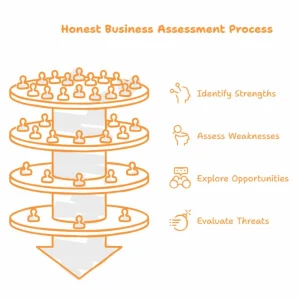
The Honest Assessment

I walk clients through what I call the four-corner analysis. It’s a modified SWOT, but I make it brutally honest.

Your Strengths:

What do you genuinely do better than competitors? I’m not looking for fluff like “great customer service.” I need specifics. Do you complete wells 20% faster? Have zero lost-time incidents over three years? Serve a region no one else covers?

Your Weaknesses:

Where are you genuinely vulnerable? Maybe your website looks like it was built when dial-up was still a thing. Maybe you have no digital presence outside your homepage. Maybe your sales team complains they never get good leads from marketing.

Your Opportunities:

What’s changing in your market that you can capitalize on? New basin opening up? Competitor going through financial troubles? Regulatory shift that favors your approach?

Your Threats:

What keeps you up at night? Price volatility? New environmental regulations? Larger competitors entering your market?

I’ve seen companies skip this step and jump straight into tactics. They waste six months and thousands of dollars before realizing they were solving the wrong problem.

Review Past Marketing Performance

I ask clients to show me everything they’ve done in the past year. Every campaign. Every trade show. Every piece of content.

Then I ask the hard questions:

  • Which activities generated actual sales opportunities?
  • What did you spend on channels that produced nothing?
  • What feedback did your sales team give you?
  • What did your best customers tell you about how they found you?

One client I worked with was spending $40K annually on industry directory listings that generated exactly two inquiries in 18 months. Both were tire-kickers who never converted. We killed those listings and redirected the budget to LinkedIn ads targeting specific job titles at target accounts. Generated 23 qualified opportunities in the first quarter.

That’s what honest assessment does.

Define Your Ideal Customer Profile (ICP)

Here’s the biggest mistake I see oil and gas companies make: trying to be everything to everyone.

“We serve all upstream operators.” No, you don’t. Or at least you shouldn’t.

Choose Your Niche

I work with an equipment supplier who thought they needed to target every E&P company in North America. Broad target. Generic messaging. Mediocre results.

We narrowed it down. Permian Basin operators only. Companies running 10-50 rigs. Focused on horizontal drilling. Privately held or backed by private equity.

Suddenly everything got clearer. We knew where these people gathered. We knew what publications they read. We knew what problems kept them up at night. Our messaging got specific. Our content got relevant.

Lead quality went up 300%. Cost per lead dropped by 60%.

That’s the power of focus.

Understanding the Real Decision Makers

In B2B energy sales, I’ve learned that multiple people influence every purchase. Your marketing needs to speak to all of them.

When I map out the buying committee for clients, it usually includes:

Technical Evaluator: Usually an operations manager or chief engineer. They care about specifications, reliability data, and technical performance. They’re reading technical papers and attending engineering conferences.

Financial Gatekeeper: CFO or procurement director. They want to see ROI calculations, total cost of ownership, and payment terms. They’re analyzing spreadsheets and reviewing contracts.

Executive Decision-Maker: CEO or business unit leader. They care about strategic fit, risk mitigation, and long-term partnership value. They’re networking at high-level industry events and reading business publications.

Influencers: Industry consultants, engineering firms, equipment distributors. They recommend solutions based on reputation and relationship. They’re everywhere, and they’re often forgotten in marketing plans.

I create different content for each of these personas. Technical white papers for engineers. ROI calculators for finance folks. Executive briefings for C-suite. Relationship-building programs for influencers.

Most companies create one generic brochure and wonder why it doesn’t resonate.

Setting SMART Marketing Goals

I’ve reviewed hundreds of marketing plans. Most have terrible goals.

“Increase brand awareness.” What does that even mean? How do you measure it? When do you know you’ve achieved it?

I use the SMART framework with every client, but I make it practical.

SMART Goals Framework

What Good Goals Look Like

Let me show you real goals from real clients I’ve worked with:

Fuel Marketer Planning Expansion:

  • Specific: Generate 500 qualified leads from commercial fleet operators in five target markets within 6 months
  • Measurable: Achieve 40% aided brand awareness among transportation companies in those markets (measured by survey)
  • Attainable: Rank in top 3 Google results for “commercial fueling [city name]” in all five markets
  • Relevant: Grow LinkedIn company page following from 800 to 2,000 with 80% followers from target industries
  • Timely: Grow LinkedIn following within 6 months

Drilling Services Company:

  • Specific: Create 45 sales-qualified opportunities from target accounts (defined as operators with 5+ active rigs)
  • Measurable Reduce average sales cycle from 9 months to 6.5 months through better marketing qualification
  • Attainable: Achieve 25% conversion rate from marketing qualified lead to sales accepted lead
  • Relevant: Generate $8M in pipeline value with marketing attribution
  • Timely: Achieve above goal within 12 month

See the difference? These are specific, measurable, time-bound, and directly tied to business outcomes.

Timeline Conversation

I always have this conversation with new clients: “Based on your current performance and resources, what’s actually achievable?”

If you’re generating 20 leads per quarter now, jumping to 200 next quarter isn’t realistic unless you’re making massive budget and resource investments. But 35 leads? That’s aggressive but doable.

I plan in 90-day sprints for this reason. Three months is enough time to see results but short enough to pivot if something isn’t working.

Differentiation Challenge in a Commodity Market

This is where it gets hard. Oil and gas can feel like a commodity business. How do you differentiate when everyone claims to be “best in class” and “committed to safety”?

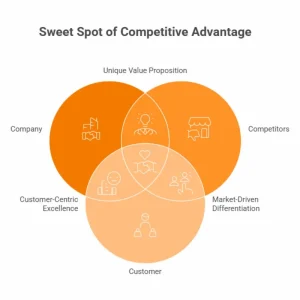
I use what I call the Three C’s test with every client.


Finding Your Real Competitive Advantage

Your differentiation must live at the intersection of:

  1. Company: What you can actually deliver consistently
  2. Competitors: What competitors aren’t doing or doing poorly
  3. Customer: What customers genuinely care about

I worked with a pipeline integrity company that was positioning themselves on “industry-leading technology.” Problem? Three of their competitors used the exact same equipment from the same manufacturers.

We dug deeper. What they were actually great at was predictive analytics using data to prevent failures before they happened. Their team had developed proprietary algorithms that analyzed sensor data in real-time.

The outcome? Their clients had 60% fewer unplanned shutdowns compared to the industry average. That’s a $2-3M annual savings for a typical midstream operator.

We repositioned everything around that outcome: “We predict pipeline failures before they happen, saving our clients millions in downtime and emergency repairs.”

Specific. Provable. Valuable. Different.

Moving from Claims to Proof

I’ve learned that nobody believes your marketing claims anymore. They need evidence.

Instead of “We provide the fastest turnaround times,” I help clients say: “We’ve completed 127 well completions in the last 18 months with an average completion time of 14.2 days 23% faster than basin average.”

Instead of “Our safety program is best in class,” we say: “Zero lost-time incidents across 2.3 million man-hours over three years. Our recordable incident rate of 0.17 is 80% below industry average.”

Instead of “We help operators reduce costs,” we say: “Our clients average $340K in savings per well through our drilling optimization process. Here are five case studies with specific data.”

From my experience, this shift from claims to proof is what separates effective marketing from noise.

Channels That Actually Work for B2B Energy

I get asked all the time: “What marketing channels should we use?”

My answer: the ones where your buyers actually are. Below are some channels

  • Google Ads
  • LinkedIn for B2B.
  • Content Marketing
  • Website
  • Don’t Forget the Channel Partners

Select High-Impact Marketing Channels and Tactics for more you can check our article 7 Marketing Tactics for Oil and Gas Companies

Budget Allocation: What I Actually Recommend

I don’t believe in percentage-of-revenue budgeting for marketing. I believe in goal-based budgeting. For in detail knowledge you can check How to Build a Marketing Budget for an Oil & Gas Company

Measuring What Actually Matters

I see a lot of marketing reports full of vanity metrics. Impressions. Reach. Engagement rate.

None of that pays the bills.

The Metrics I Track

Early-Stage Metrics (tell me if we’re building awareness):

  • Website traffic from target accounts (not total traffic)
  • Content downloads by company type
  • Webinar registrations from qualified companies
  • Social media engagement from target personas (not random followers)

Mid-Stage Metrics (tell me if we’re generating real interest):

  • Marketing qualified leads (MQLs) generated
  • Cost per MQL by channel
  • MQL to sales-qualified lead (SQL) conversion rate
  • Sales team feedback on lead quality

Late-Stage Metrics (tell me if we’re driving revenue):

  • Pipeline value with marketing attribution
  • Marketing-influenced revenue
  • Customer acquisition cost
  • Average deal size from marketing sources
  • Sales cycle length (marketing should shorten this)

Long-Term Metrics (tell me if we’re building value):

  • Customer lifetime value
  • Win rate on competitive deals
  • Customer retention rate
  • Referral rate from existing customers

The Dashboard I Build

I create a single-page dashboard that answers these questions:

  • Are we generating enough leads? (volume)
  • Are they the right leads? (quality)
  • Are they turning into opportunities? (conversion)
  • Are we winning the deals? (close rate)
  • Are we spending efficiently? (ROI)

Updated weekly. Reviewed monthly with leadership. Analyzed quarterly for strategic decisions.

No fluff. Just numbers that matter.

Aligning Marketing with Sales

This is where most B2B marketing dies. Marketing generates leads. Sales says they’re terrible. Marketing gets defensive. Nothing gets better.

I fix this by forcing alignment from day one.

The Agreement I Make Sales Sign

Before I start any marketing program, I get sales leadership to agree on:

Lead Definition: Exactly what constitutes a marketing qualified lead. Usually something like:

  • Company matches ICP (size, industry, location)
  • Individual has relevant job title
  • Demonstrated specific interest (downloaded case study, attended webinar, requested quote)
  • Has budget and authority or can introduce us to who does
  • Need identified within next 6-12 months

What I’ve Learned After Years of This

I’ve built marketing programs for exploration companies, equipment suppliers, midstream operators, service providers, and fuel marketers. Different segments, but the same fundamental truths apply.

Focus beats scale. Every time. The companies trying to be everything to everyone get mediocre results everywhere. The companies that dominate a specific niche crush it.

Proof beats promises. Nobody believes your claims about quality and service. They believe your case studies with real data from real customers.

Consistency beats brilliance. One brilliant campaign that runs for a month doesn’t move the needle. Steady, consistent execution of good tactics wins over time.

Alignment beats activity. Marketing doing 50 things that don’t support sales goals is worthless. Marketing doing 7 things that directly generate sales opportunities is gold.

Speed beats perfection. I’d rather launch something good today and improve it based on real data than wait three months to launch something “perfect.”

Want to talk through how this would work for your company? I do this for a living. Drop me a note, and let’s figure out what’s holding you back and what would move the needle for your business.

How to Build PPC Strategies for Energy Companies for High-Performance

The energy industry has been highly competitive over the past decade, with consumers accustomed to switching providers. More recent years have seen many suppliers dropping out of the market due to soaring prices. Times are changing again as prices start to drop and a well-crafted PPC campaign can be extremely effective in helping your brand stand out and win new customers.

This guide walks you through the key challenges in energy PPC, the most effective campaign types, audience and keyword strategies, and how to measure your results.

Why Energy Companies Need PPC

Pay-per-click advertising has emerged as a powerful tool for power and utility companies, offering precise targeting and measurable results. Traditional marketing methods can fall short PPC fills that gap by putting your brand directly in front of customers who are actively searching for energy solutions.

Key reasons PPC drives growth for energy companies:

  • Brand Awareness increase recognition and reach a broader audience
  • Customer Acquisition attract new customers with targeted ad formats
  • Local Market Penetration tailor campaigns to specific geographic service areas
  • Service Promotion highlight specific services and special offers
  • Data-Driven Insights detailed analytics to refine marketing strategies
  • Lead Generation direct interested prospects to contact forms and service inquiries
  • Brand Reputation Management promote positive content and manage online perception

Challenges of Energy PPC

Lack of Distinction Between Products and Services

A common frustration for prospective clients in the energy sector is the difficulty in distinguishing between providers. The right PPC campaign educates clients by highlighting key features and differences. What sets you apart is what brings in the most relevant customers.

2. Building Trust in a Volatile Market

After years of supplier collapses and soaring prices, consumers are cautious. Trust doesn’t come from a single ad. It’s built over time through repeated exposure, consistent messaging, and a strong brand identity across multiple touchpoints.

Key Insight:

Energy PPC is a slow sell. Don’t expect your first campaign to convert immediately. Build a multi-format strategy designed to nurture prospects across weeks or months, not days.

Two Pillars: Relevance & Trust

Relevance

PPC only shows your ad when someone searches a related keyword meaning every impression is already a warm prospect. Tight keyword targeting, well-structured ad groups, and ad copy that speaks directly to the searcher’s intent all work together to keep relevance high and costs low.

Trust

Once relevance is established, trust becomes the long game. Showing up repeatedly across search, display, and social in a consistent, professional, and helpful way is how you move a potential customer from curious to committed.

The Energy PPC Trust Formula:

Frequency + Relevance × Time = Trust

Know Your Audience

The energy market is diverse. Your campaigns should reflect that with distinct audience segments, each receiving messaging tailored to their needs and motivations.

Primary Audience

Homeowners seeking affordable, sustainable energy options. Use warm, friendly, accessible copy that positions you as a trusted expert.

Influencer Audience

Electrical utilities, environmental groups, real estate firms, local communities. Need clarity, accuracy, and authentic messaging that doesn’t oversell.

B2B / Commercial

Decision-makers at commercial businesses searching for energy solutions at scale. Digital marketing for oil and gas companies can help you reach these decision-makers effectively. LinkedIn is your best channel — target by job title, industry, and company size.

Remarketing Audience

Past visitors who showed interest but didn’t convert. Segment by behaviour and serve personalised ads to bring them back.

Right Ad Types for Energy

Different ad formats serve different goals. Here’s how each one fits into an energy PPC strategy:

Search Ads

The foundation of any energy PPC campaign. Text-based ads appearing at the top of search results when someone types a relevant query. Perfect for capturing high-intent searches like “switch energy supplier” or “commercial electricity provider.” Strong ad copy establishes your brand voice and authority immediately.

Display Ads

Visual banners that appear across websites in Google’s Display Network. Best used for awareness and remarketing. When a potential customer visits your site and then sees your display ad elsewhere, it reinforces your brand without requiring them to actively search again.

Shopping Ads

Ideal for energy product companies solar panel installers, smart meter providers, home battery manufacturers. These product-feed ads are highly visual and link directly to product pages, reducing the steps between interest and purchase.

Social Media Ads

Great for brand identity and reaching audiences beyond Google. Facebook and Instagram work for residential audiences; LinkedIn is essential for B2B. Social ads allow for striking visual storytelling and can include video powerful for explaining complex energy offerings in an engaging way.

8 Must-Try PPC Strategies for Energy Companies

These are the core tactics that separate high-performing energy PPC campaigns from ones quietly draining budget with little return. While you can implement these yourself, PPC management services for energy companies offer specialized expertise to execute them at scale.

Targeted Keyword Bidding for Industry-Specific Terms

Focus bids on high-intent, industry-specific keywords like “commercial energy solutions” or “home electricity plans.” The more targeted your keywords, the more qualified your clicks and the less budget wasted on irrelevant traffic.

Localised Ad Campaigns for Service Areas

Use geo-targeting to serve ads only within your service area. Customise copy to reflect local needs and include region-specific offers. “Exclusive Manchester Offer: Free Energy Audit This Month” outperforms generic copy every time.

Remarketing Campaigns for Inactive Customers

Not everyone converts on the first visit. Remarketing lets you re-engage people who showed interest but didn’t act. Segment by behaviour (e.g., visited the pricing page) and serve personalised ads that remind them why you’re the right choice.

Ad Extensions to Highlight Key Services

Maximise your ad real estate with sitelinks (“Residential Plans,” “Commercial Solutions”), callout extensions (“Free Energy Audit,” “24/7 Support”), and structured snippets. These add context, build credibility, and improve click-through rates.

Compelling Ad Copy That Speaks to Pain Points

Write copy that addresses real frustrations: high bills, unreliable providers, confusing tariffs. Lead with benefits, not features. End with a clear CTA like “Get Your Free Quote Today” or “Start Saving on Your Energy Bills Now.”

Ad Scheduling Based on Peak Demand

Use dayparting to show ads when your audience is most likely to search and act. Analyse historical data to identify peak search times, then increase bids during those windows to stay competitive when it matters most.

Landing Page Optimisation for Higher Conversions

Your landing page must deliver on the promise your ad made. Match the headline to the ad copy, include a single clear CTA, remove distractions, and ensure it loads fast and displays perfectly on mobile. A great ad with a weak landing page leaks conversions.

A/B Testing Ad Variations Continuously

Never assume one version is the best. Test different headlines, CTAs, and visuals systematically. Even a small improvement in click-through rate from 3% to 4% can mean a significant difference in leads generated over a month.

Keyword Strategy That Saves Budget

Keyword management is where energy PPC campaigns win or lose. Here’s what a smart keyword approach looks like:

  • Prioritise Relevance Over Volume Broad, high-volume keywords like “energy” burn budget fast. Focus on specific terms aligned with your exact offering “solar panel installation quote” or “commercial gas tariff comparison.”
  • Build Aggressive Negative Keyword Lists Stop your ads showing for searches that will never convert. If you’re a commercial provider, exclude terms like “DIY energy saving” or “energy vouchers.” Negative keywords literally save you money.
  • Use Branded Campaigns to Protect Your Name Competitors will bid on your brand name. A branded campaign ensures that when someone searches for you specifically, your ad wins that space not a rival’s.
  • Stay Flexible The Market Changes Fast. Use Google Keyword Planner regularly. New trends (heat pumps, smart meters, EV charging) create new keyword opportunities. The companies that spot and act on these trends first capture new audiences before competitors notice. Learn more about energy sector keyword strategies to stay ahead.

How to Measure Campaign Success

Running campaigns without tracking is guesswork. These are the metrics that matter most for energy PPC:

  • Click-Through Rate (CTR)
  • Cost Per Click (CPC)
  • Conversion Rate (CVR)
  • Return on Ad Spend (ROAS)

Review these metrics in Google Ads at least every two weeks. Set up conversion tracking to understand which campaigns and keywords are actually generating leads not just clicks. Use Google Analytics to see how visitors behave after they land on your site.

The more consistently you review and respond to this data, the sharper your campaigns become over time. The budget that was once wasted on irrelevant searches gets reallocated to what’s actually working.

Budget Guidance:

Most energy companies should plan for £5,000–£20,000 per month in PPC spend, depending on market size and competitive intensity. Smaller regional providers can start at the lower end and scale as results come in.

Ready to Build Your Energy PPC Campaign?

The energy market is shifting and the companies that invest in smart, targeted PPC now will be the ones winning new customers when competitors are still figuring out their strategy. Start with one tactic, measure the results, and build from there.

For comprehensive support, discover proven oil and gas marketing strategies that drive results.

Frequently Asked Questions

How much should energy companies budget for PPC?

Power and utility companies should allocate between £5,000 and £20,000 per month for PPC advertising, depending on size and market reach. Smaller companies can start at the lower end, while larger firms in competitive markets may invest more heavily.

What are common mistakes to avoid?

Common mistakes include neglecting local targeting, failing to align ad copy with user intent, not using negative keywords (leading to wasted budget), and neglecting regular performance reviews. Reviewing campaigns at least every two weeks is strongly recommended.

How is PPC different for the energy industry?

PPC tactics themselves keywords, ad copy, audience segments apply across all industries. What differs is the strategy: ad type mix, spend allocation, and timing must all reflect energy-industry-specific trends, seasonality, and audience behaviour.

What should I look for in a PPC agency for energy?

Ideally, choose an agency with energy sector experience this reduces the learning curve on nuances like seasonality. That said, a strong PPC agency will ask the right questions. Prioritise demonstrated PPC expertise and a track record of measurable results.